


Achieving luxury home decor on a budget is easier than most people think. The homes that feel most elevated are rarely the result of unlimited spending. They are the result of deliberate choices, smart priorities, and a clear understanding of what genuinely creates the feeling of luxury.
This guide is different from the usual generic advice. Instead of a broad tips list, it walks you through luxury home decor room by room — starting where impact is highest and working outward. Every strategy here is specific, actionable, and designed to work within a real budget in a Pakistani home.
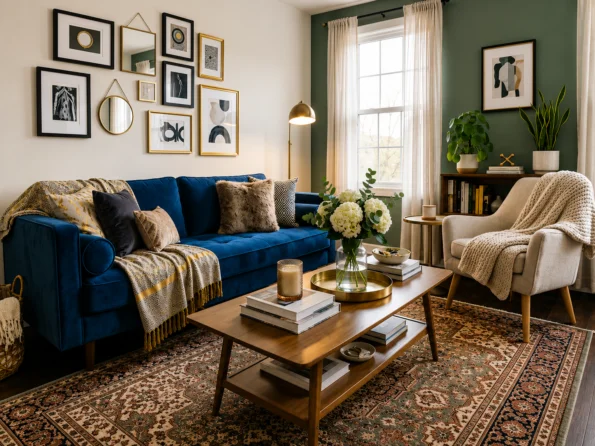
What Actually Makes a Home Feel Luxurious
Before spending a single rupee, it helps to understand what creates the feeling of luxury. Expensive homes do not feel luxurious simply because of costly furniture. They feel luxurious because of three qualities you can replicate at any budget:
Intentionality — every element appears chosen deliberately. There is a coherent vision throughout the space.
Texture and layering — luxury home decor engages the senses. Soft meets hard. Matte meets gloss. Rough meets smooth.
Restraint — high-end interiors are never cluttered. A room with fewer, better-chosen pieces always reads as more expensive than one stuffed with many inexpensive items.
Once you understand these three principles, every decorating decision becomes clearer.
Bedroom Luxury Home Decor: Highest Impact, Lowest Cost
Interior designers consistently agree that the bedroom offers the best return on investment for budget decorating. It is the most personal space in any home. Its dominant surface — the bed — can be transformed dramatically without touching a single wall or piece of furniture.
Invest in Your Bedding First
The single most effective luxury home decor upgrade in any bedroom is elevated bedding. A bed dressed in beautiful, layered bedding looks expensive regardless of what the rest of the room contains. Five-star hotels use this principle worldwide — the architecture and furniture may vary, but the bed is always immaculate.
For a bedroom that feels genuinely luxurious, the craftsmanship of your bedding matters enormously. Embroidered bedsheets bring high-craft quality to a Pakistani bedroom without the price tag of imported luxury linen. The intricate threadwork adds visual richness that plain bedding cannot replicate. In Pakistani homes, embroidered textiles also carry a cultural resonance that makes them feel authentically luxurious.
Layer Your Bedding Like a Designer
Luxury hotel beds are not simply covered with one sheet. They are layered. A fitted sheet forms the base, followed by a flat sheet, then a duvet or quilt, then a folded throw at the foot. Each layer adds visual depth and the impression of care and attention.
You do not need every layer to achieve the effect. Even adding a single folded throw in a contrasting texture — a knitted blanket over cotton sheets — transforms how a bed looks in the room.
Choose a Cohesive Color Palette
Luxury bedrooms are rarely decorated in multiple competing colors. Instead, choose two or three tones that work together — a neutral base, a secondary tone, and a single accent. Apply them consistently across your bedding, curtains, and cushions. This coherence is what creates the intentional, designer-curated feeling that makes rooms look expensive.
Warm neutrals — ivory, soft taupe, warm grey — work beautifully with the rich jewel tones often found in Pakistani embroidered textiles.
Living Room Luxury Home Decor: Edit, Do Not Add
The most common mistake in budget living room decorating is trying to fill space. Every surface gets an ornament, every wall gets something hung on it, every corner gets a plant. The result looks busy rather than beautiful.
The luxury home decor approach is the opposite. Edit rather than add.
Identify Your One Statement Piece
Every well-designed living room has one element that anchors the space. It draws the eye and sets the tone for everything else. This could be a sofa in a rich fabric, a large piece of framed artwork, an oversized mirror, or an area rug with real visual presence.
Choose one. Invest more in that single piece and let everything else support it. A statement piece does not need to be expensive. A large canvas in bold tones, a vintage mirror from a local market, or a beautifully patterned rug can anchor a room very effectively.
Use Curtains to Add Architecture
One of the most underused tricks in affordable interior design is hanging curtains higher and wider than the actual window. Installing rods close to the ceiling — 15 to 20 centimetres above the window frame — and extending them beyond the window’s width creates the impression of taller ceilings and larger windows. This trick costs nothing more than extra fabric and a repositioned rod.
Choose floor-length curtains in a solid, textured fabric in a tone that complements your wall colour. This single change can transform the scale and elegance of an ordinary living room.
Embrace Negative Space
Resist the impulse to fill every surface. A shelf styled with three considered objects looks more intentional — and more expensive — than the same surface covered with ten cheap items. If in doubt, remove rather than add.
The Dining Area: Elevated on an Everyday Budget
In Pakistani homes, the dining table is a social focal point. Making it feel elevated does not require new furniture or expensive tableware.
Invest in a Quality Table Runner or Centerpiece
A table runner in a rich fabric — embroidered cotton, textured linen, or a woven material — instantly elevates any dining table. Pair it with one well-chosen centerpiece: a ceramic vase with dried botanicals, a grouping of pillar candles at different heights, or a cluster of glass objects that catch the light. Restraint in quantity is what gives these arrangements their polished quality.
Use Matching Tableware Selectively
You do not need a full set of expensive tableware to create a luxurious dining atmosphere. Choosing two or three visually consistent elements — matching glasses, a uniform set of plates, or coordinated napkins — is enough to give the table a curated look. Mismatched tableware reads as casual. Matched elements, even simple ones, read as considered.
Lighting: The Cheapest Way to Change Everything
Lighting has a greater impact on how luxurious a room feels than almost any other element. Yet it is consistently underestimated in budget decorating.
Harsh overhead lighting is the enemy of luxury home decor. It exposes imperfections, flattens textures, and makes even beautiful rooms feel ordinary. The solution is layering light sources.
Replace reliance on a single ceiling fixture with multiple lower sources: a table lamp on a side table, a floor lamp in a reading corner, candles on a dining table. Warm-toned bulbs in the 2700K to 3000K range produce a golden light that makes every surface look richer. A simple floor lamp and a pack of warm LED bulbs can change the atmosphere of a room for a modest outlay.
Scent: The Forgotten Dimension of Luxury Home Decor
The most immersive luxury spaces engage more than the eyes. Walk into a five-star hotel and you will notice it smells distinctive — warm, clean, and subtly complex. That signature scent is a deliberate design decision.
Scent is one of the cheapest and most powerful tools in luxury home decor. A reed diffuser, a quality scented candle, or essential oils in a diffuser can give your home an immediate sense of intentionality.
In Pakistani homes, warm familiar scents — oud, rose, jasmine, sandalwood — work beautifully. They also connect to a cultural tradition of fragrance that communicates refinement and hospitality.
Where to Spend and Where to Save
Not all areas of a home reward spending equally. This framework helps you allocate a limited budget where it produces the greatest visible impact in your luxury home decor.
Spend more on: bedding and bedroom textiles, one statement furniture piece per room, curtains, lighting, and items touched or used daily — because quality is felt, not just seen.
Save confidently on: decorative accessories and ornaments, wall art (DIY or printed options work very well), side tables and supporting furniture, storage pieces that are partially concealed, and seasonal decor that changes regularly.
Invest in bedding for your home: In Pakistani homes, quality bedding is both a practical and a social investment. Guest rooms benefit most from elevated bedding. It is what visitors experience directly, and its quality communicates care and pride in hospitality.
Small Upgrades with an Outsized Impact
Some of the most effective luxury home decor upgrades cost very little but require attention to detail:
Switch out hardware: Replacing drawer handles and cabinet knobs with brushed brass, matte black, or antique bronze alternatives upgrades furniture immediately. This five-minute change costs very little and transforms how a piece reads in a room.
Frame everything: Unframed art or prints look informal regardless of quality. A simple frame — even an inexpensive one in a coordinating finish — elevates any printed image into a considered design element.
Keep surfaces clean and clear: The most consistent characteristic of luxury interiors is cleanliness. Clutter on worktops and side tables immediately undermines every other decorating effort. A clear, styled surface communicates intentionality more powerfully than any individual object.
Add real or high-quality faux greenery: A single large plant in a ceramic or woven pot brings organic texture and vitality to any room. One well-placed plant does more than ten small ones scattered across surfaces.
Final Thoughts
Luxury home decor on a budget is not about pretending to spend more than you have. It is about understanding what creates the feeling of luxury — intentionality, texture, restraint, and sensory depth — and applying those principles through smart choices.
Start with your bedroom. Elevate your bedding. Edit your living room rather than adding to it. Layer your lighting. Let scent become part of your home’s identity.
The homes that feel most luxurious are always the ones where every decision appears to have been made with care. That kind of care costs thought and attention — not an unlimited budget.