


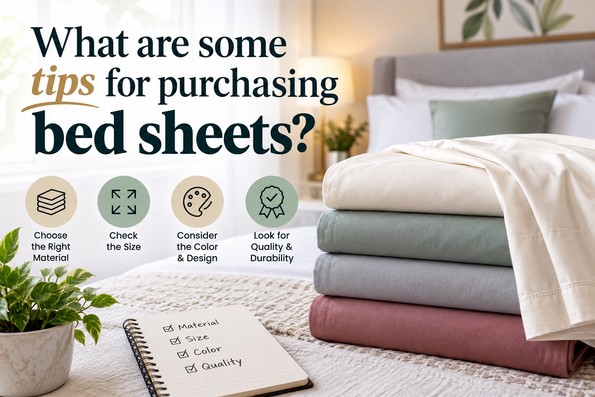
Measure your mattress in inches before you shop, because bedding sizes are not standardised in Pakistan. Ignore thread count claims above 400 — they are usually reached by counting strands rather than yarns. Choose cotton for summer and velvet or a comforter for winter. Allow for shrinkage and buy with tuck margin built in.
Most people buy bed sheets the same way: they see a print they like, check the price, and order. Three weeks later the corners won’t stay tucked, the colour has faded a shade, and the “600 thread count” set feels rougher than the cheap one it replaced.
None of that is bad luck. Every one of those problems is predictable from the product listing, if you know what to look at.
This guide covers the eight things worth checking before you spend money — written for Pakistani beds, Pakistani weather, and the way people actually shop online here.
1. Measure your mattress first — sizes are not standardised in Pakistan
Take a measuring tape to your mattress and write down the width, length and thickness in inches before you look at a single product page. There is no fixed bedding size standard in Pakistan, so the same word means different cloth at different sellers.
The mattress sizes themselves are reasonably consistent. What varies is what people call them:
| Common name | Mattress size (inches) | In cm | Typical use |
|---|---|---|---|
| Single / Twin | 42 × 78 | 107 × 198 | Kids’ room, hostel, guest room |
| Queen 1 / Standard Queen / Double | 60 × 78 | 152 × 198 | The most common adult bed in Pakistan |
| Queen 2 / Super Queen | 66 × 78 | 168 × 198 | Couples wanting extra width |
| King | 72 × 78 | 183 × 198 | Master bedrooms |
| King XL | 72 × 84 | 183 × 213 | Tall sleepers; often needs custom bedding |
Notice the problem in row two and three. Some sellers call 60 × 78 a queen. Others call it a double and reserve “queen” for 66 × 78. Order by name alone and you have a real chance of receiving something six inches too narrow.
Sheet sizes vary even more. Across three sellers a double sheet can be 94 × 98 inches at one and 96 × 102 at another, with a king at 95 × 99 somewhere else. Same word, different cloth.
The rule: buy by inches, never by label. A listing that does not state dimensions in inches is telling you something about the seller.
Working out the size you need
Measure the mattress width and length, then add roughly 20 inches to each so the cloth tucks under on all four sides. Add more if the mattress is deep — every extra inch of mattress thickness eats two inches of sheet.
Two things throw this off, and both are common in Pakistani homes:
- Orthopaedic and memory foam mattresses are thicker: A 10-inch mattress needs 20 inches more cloth than a thin one, before any tuck margin.
- A mattress topper counts as thickness: Measure with the topper on.
For fitted sheets, depth matters more than width. Measure how thick the mattress is with everything already on it, because a shallow pocket is what makes corners pop off in the first week.
Every listing on this site shows its own size. If you fall between two, send your measurements on WhatsApp to 0324 492 4274 before ordering.
2. Stop paying for thread counts above 400
Thread count above 400 is usually reached by counting each strand of a twisted yarn separately, which adds a number to the label without adding cloth. This is the most expensive misunderstanding in the bedding market.
Thread count means how many threads are woven into one square inch. Under the ASTM standard used across the textile trade, each yarn counts as one thread even when it is spun from two or three finer strands twisted together.
Not everyone follows it. Twist two thin threads into one yarn, count each strand separately, and a genuine 300 becomes a 600 on the packaging. The fabric has not changed at all. In a 2005 letter to the National Textile Association, the US Federal Trade Commission agreed that shoppers could be deceived by inflated counts.
It is worse than just misleading. Multi-ply yarns are usually spun from shorter fibres that need twisting for strength, producing cloth that is heavier, stiffer and less breathable. In Lahore in June, that matters a great deal.
What the numbers actually mean here
| Range | What it is |
|---|---|
| Around 150 | Ordinary cotton sheeting |
| From about 180 | Good quality |
| Above 200 | Percale |
| Beyond 400 | Be careful — a genuine single-yarn weave cannot climb much higher without the cloth turning stiff |
What matters more than the count: the fabric itself and the yarn. Ask whether the yarn is single or two-ply, and judge the weight of the cloth in your hand. A heavier fabric at 200 will outlast a thin one claiming 800.
Pakistan grows and spins its own cotton, so genuinely good sheeting is available here at prices that would be impossible in an import market — but only if you know what to ask for.
3. Match the fabric to the season and the room
Cotton for April through September, velvet or a comforter for the winter months. Pakistan’s temperature range is wide enough that one fabric cannot serve the whole year, which is why most households end up owning two sets.
Four fabrics cover almost everything sold here, and none of them is right for every room.
Cotton breathes. Air moves through the weave and carries body heat away instead of holding it. That is exactly what you want from April onwards, when Lahore nights stay warm long after dark. It wrinkles more than the alternatives and takes longer to dry — a fair trade in summer.
Cotton satin is cotton woven differently. The threads float across the surface rather than crossing at every point, so the face is smoother, carries a light sheen and shows creases less. Slightly warmer against the skin than plain cotton.
Jeans is heavier and more tightly woven. It takes hard daily use and holds colour well, which makes it sensible for children’s rooms and any bed that gets rough treatment. Note that “jeans” names the weave, not the colour — a jeans bed sheet is not always blue.
Velvet has a raised pile that traps warm air at the surface. Wrong in June, right in January. For the coldest months, pair it with a comforter set or a blanket.
Some ranges are blended with polyester to cut creasing and cost. That is a legitimate choice — blends wrinkle less, dry faster and hold colour longer — but it should be stated on the listing rather than discovered after a wash.
4. Check what is actually in the set
A bed sheet set in Pakistan usually means one flat sheet plus pillow covers — rarely a fitted sheet, and almost never a duvet cover. Confirm the contents before ordering, because “set” is used loosely across this market.
Typical contents:
- Single set: 1 sheet + 1 pillow cover
- Double and king sets: 1 sheet + 2 pillow covers
Pillow covers have their own sizing that people forget to check:
| Pillow size | Dimensions |
|---|---|
| Standard | 20″ × 26″ |
| Super Standard / Jumbo | 20″ × 28″ |
| Queen | 20″ × 30″ |
If your pillows are larger than the covers in the set, they will look permanently stuffed and the seams will strain. Measure a pillow you already own.
If you want the quilt or duvet to match without buying a whole new set, duvet covers and quilt covers are sold separately, as are the fillings that go inside them.
5. Assume it will shrink, and buy accordingly
Cotton can shrink several percent in the wash, with the largest single shrink happening the first time. This is normal fabric behaviour rather than a defect, but it means a sheet that fits perfectly on day one will not fit in six months unless you allowed for it.
The practical response is simple: if you are between sizes, size up.
What reduces the problem:
- Wash cold and dry in the shade: Heat drives shrinkage. Line drying, which most Pakistani households do anyway, is genuinely kinder to the fabric than machine drying.
- Go gently on the first wash: That is when most of the shrink happens.
- Do not judge softness in the shop: Many sheets are treated with finishing chemicals and softeners that wash out. The set that feels silkiest on day one is sometimes the one that feels worst by month two.
A waterproof mattress protector sits under the sheet and reduces how often the whole set needs washing, which extends its life considerably.
6. Judge colour fastness before you commit
Colour fastness is the fabric’s resistance to fading and bleeding, and it is the most common complaint about bed sheets in Pakistan. The textile trade grades it 1 to 5, and export buyers typically insist on 4 or better.
You cannot test this from a photo, so use proxies:
- Dark saturated prints bleed most: Deep maroon, navy and black carry the highest risk. Wash a dark set separately the first two or three times.
- Read reviews for the word “fade,” not the word “fast“: A review written months after delivery is worth ten written in the first week. Ours are on the reviews page, where every entry is a verified purchase.
- Ask the seller directly: Anyone sourcing from a proper mill can tell you whether the fabric is colour-fast graded. A seller who cannot answer does not know what they are selling.
- Check the replacement window: If the colour or the cloth is wrong, you should be able to send it back. Ours is a seven day replacement.
7. Buy safely on a cash-on-delivery market
Cash on delivery protects your money but not your expectations — you can refuse the parcel, but you cannot feel the fabric first. The risk sits in the product description, not in the payment.
Before you order:
Check that dimensions are stated in inches: A seller listing only “double” or “king” either does not know their own product or is avoiding a returns argument later.
Check that fabric composition is stated: “Premium cotton” is not a composition. Cotton, cotton satin, jeans or a stated blend is.
Look at customer photos, not product photos: Product photography in this category is heavily colour-corrected. A phone photo taken in ordinary room light is far more honest about the actual shade.
Read the return policy for the word “unwashed“: Almost every seller requires returns unwashed and in original packaging, which means you must inspect the sheet properly at delivery — dimensions, print alignment, any weaving faults — before it goes near the machine.
Be sceptical of prices far below the category: A pure cotton double sheet at a fraction of the market rate is a blend, a second, or a shorter cut. Nothing wrong with buying a blend when it is sold as one.
Ask before you commit: If you are unsure about a size or a shade, message 0324 492 4274 first. Once ordered, you can track it the whole way.
8. Buy different quality for different beds
Not every bed in the house needs the same sheet, and spreading the budget evenly is the most common way people overspend.
Your own bed — this is where the money belongs. You spend roughly a third of your life on it. Buy cotton, and buy two sets so one can be in the wash.
Guest room — a blend earns its place here. It wrinkles less between uses, which matters when a bed sits made for weeks at a time. Plain sets suit a room that changes occupants.
Children’s beds — prioritise washability and colour fastness over softness. These get washed far more often and stained more aggressively. The kids range is designed around that, and baby nests and cot bedding are cut to cot measurements so nothing has to be folded over to fit.
Bridal and jahez sets — different logic applies, because these are bought in quantity and meant to last years of occasional use rather than nightly wear. Buy fabric quality you can verify rather than the highest number on a label, and check that all sets are from the same dye lot if you want them to match. Embroidered sets are the usual choice for a room that gets looked at.
Guest houses, hostels and hospitals — durability and wash-cycle count matter more than hand feel. A guest house is not buying on print; it is buying on whether the white stays white and the same size arrives again next year. Hotel bedding, the hospital range and export quality lines are built for repeat laundering.
Local names worth knowing
These come up in every bedding shop in Pakistan and almost nobody explains them.
Multani is the block-printed style associated with Multan — repeated hand-drawn motifs in deep colours.
Panel means the design sits as one large central section instead of repeating across the sheet. It reads more like a picture than a print.
Embossed describes a raised texture pressed into the fabric surface, giving pattern without printed colour.
Jeans names the weave, not the colour.
Common mistakes to avoid
- Buying by label instead of inches: The single biggest cause of returns in this category.
- Treating thread count as a quality score: Above 400 it is closer to a marketing score.
- Forgetting mattress thickness: A 10-inch mattress needs 20 inches more cloth than a thin one.
- Judging softness in the shop: Finishing chemicals wash out.
- Washing a new dark set with everything else: Wash it alone the first two or three times.
- Buying one set: You need a second for the days the first is drying, and rotating two makes both last longer.
Frequently asked questions
What is the best thread count for bed sheets in Pakistan?
Around 180 to 200 is good quality cotton sheeting, and above 200 is percale. Treat anything above 400 as a counting method rather than a quality claim.
What size bed sheet do I need for a double bed in Pakistan?
Most Pakistani double mattresses are 60 × 78 inches; add roughly 20 inches to each dimension for tuck. Always check the listed sheet size in inches rather than trusting the size name.
Is cotton or polyester better for bed sheets in Pakistan?
Cotton is better for summer because it breathes; a polyester blend is better for guest rooms and children’s beds because it wrinkles less and holds colour longer. Most households benefit from owning both.
How much do bed sheets shrink?
Cotton shrinks several percent, most of it in the first wash. Wash cold and dry in the shade to limit it.
How often should bed sheets be replaced?
A good cotton set used nightly lasts roughly two to three years. Rotating two sets extends both considerably.
Why do my bed sheet corners keep coming off?
The sheet is too small for the mattress depth, or it has shrunk. Adding a mattress topper without sizing up is the most common cause.
How many pillow covers come with a set?
Double and king sets usually include two; single sets include one. The listing confirms it for each item.
Which fabric is best for a Lahore summer?
Cotton, because it moves heat away from the body instead of holding it. Velvet is the winter choice and jeans sits in between.
The short checklist
Before you order, confirm all six:
- Mattress width, length and thickness measured in inches
- Sheet dimensions listed in inches, with about 20 inches of tuck margin
- Fabric stated plainly — cotton, cotton satin, jeans, velvet or a named blend
- Thread count in the 180–400 range, or not relied upon at all
- Set contents and pillow cover size confirmed
- Replacement window and unwashed condition understood
Get those six right and the print you choose is genuinely just a matter of taste — which is how it should be.
Ready to shop? Start with single or double sizes, or browse all bed sheets.