


There is a version of your bedroom that looks like it belongs in a magazine. The bed is immaculate. Every layer sits perfectly. The pillows are plump and arranged with intention. The whole room feels calmer, more considered, more luxurious — and it took less than ten minutes to achieve.
That is what a professionally made bed looks like. And the process behind it is far simpler than most people assume.
This guide walks you through every step — from the foundation of your mattress all the way to the finishing throw — with practical advice on choosing the right bed sheets, layering correctly for Pakistan’s climate, and styling your bed so it looks beautiful every single day.
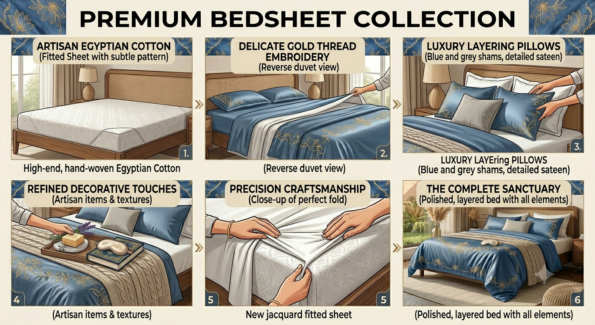
Why Making Your Bed Properly Actually Matters
Most people know that making the bed each morning is a good habit. Fewer people know exactly why — or how much the quality of their bed-making process actually affects their sleep and daily mood.
Research consistently shows that people who make their beds each morning report better sleep quality, greater productivity throughout the day, and a stronger sense of control over their environment. The act of making the bed — particularly doing it properly — signals to the brain that the sleep space is intentional and ordered. That psychological cue carries into the evening, making it easier to fall asleep in a space that feels calm and prepared.
Beyond sleep, a well-made bed is the single most impactful thing you can do for your bedroom’s appearance. The bed occupies more visual space than any other element in the room. When it looks polished, the entire room looks polished — regardless of what else is happening around it.
What You Need Before You Start
Before learning the technique, make sure you have the right components. A professionally made bed requires more than just sheets and pillows — it requires the right sheets and the right pillows, layered in the right order.
The essentials:
- A clean, well-fitted mattress protector
- A fitted bed sheet in the correct size and pocket depth for your mattress
- A flat sheet or top sheet
- Pillows in the right size for your bed
- A duvet, quilt, or comforter appropriate for the season
- Pillowcases that match or complement your sheets
The styling additions:
- One or two decorative cushions or bolster pillows
- A folded throw or blanket for the foot of the bed
The quality of your bed sheets matters more than most people realise. Crisp, well-made bed sheets that fit the mattress correctly are the foundation of everything that follows. Sheets that are too small will pull and pop off at the corners. Sheets that are too large will bunch and wrinkle. Neither can be styled into looking good, no matter how skilled the bed-maker.
Explore the full range of fitted bed sheets in the correct size for your mattress before anything else.
Step-by-Step: How to Make Your Bed Like a Pro
Step 1 — Start With a Clean Mattress Protector
The mattress protector is the invisible foundation of everything above it. It protects your mattress from sweat, dust, and daily wear — extending its lifespan significantly. A good mattress protector also adds a slight layer of cushioning that makes the surface beneath your sheets feel smoother and more even.
Make sure the mattress protector fits snugly. A loose or bunching protector creates an uneven surface that no amount of sheet-straightening can fix.
Step 2 — Fit Your Bed Sheet Correctly
The fitted bed sheet goes on next, directly over the mattress protector. This is the step where most people encounter problems — and where most bed-making mistakes originate.
Start at one corner, pulling the elasticated pocket firmly over the corner of the mattress. Work diagonally — do the opposite corner next, then fill in the remaining two. This technique keeps the sheet taut and even across the entire surface.
If your fitted sheet keeps popping off at the corners, the problem is almost always pocket depth — the sheet’s elastic is not deep enough to accommodate your mattress thickness. This is particularly common with thicker orthopaedic or pillow-top mattresses. Switch to a deep-pocket fitted sheet and the problem will resolve immediately.
Once fitted correctly, run your hands across the surface of the sheet, smoothing out any wrinkles from the centre outward. A smooth base makes every subsequent layer look better.
Step 3 — Layer the Flat Sheet
The flat sheet — also called a top sheet — goes over the fitted sheet, print side facing down toward the mattress. This positioning matters: when you fold the top of the flat sheet back over the duvet or quilt, the pattern faces upward, adding a decorative detail to the finished bed.
Lay the flat sheet evenly across the mattress, with an equal amount of fabric hanging over each side. Align the top edge with the head of the mattress.
At the foot of the bed, tuck the flat sheet firmly under the mattress. For a particularly crisp, hotel-style finish, create hospital corners at the foot: fold the side of the sheet up at a 45-degree angle, tuck the hanging fabric underneath the mattress, then fold the angled portion back down and tuck it in. This keeps the foot of the bed looking tight and neat throughout the day.
Step 4 — Add Your Duvet, Quilt, or Seasonal Layer
In Pakistan’s varied climate, the choice of top layer changes with the season — and that seasonal awareness is one of the marks of a truly well-dressed bed.
Summer (May to August): Use a lightweight cotton or voile blanket as your top layer. Heavy duvets trap heat and become uncomfortable in Pakistan’s summer months. A single breathable layer over your flat sheet is often sufficient.
Transitional seasons (March to April, September to October): A medium-weight quilt or thin cotton blanket provides the right level of warmth without overheating.
Winter (November to February): Bring out a proper duvet or comforter. In Lahore, Islamabad, and northern Pakistan, a heavier fill is genuinely needed during the coldest months.
Lay your chosen top layer evenly across the bed, with the top edge approximately 20 to 30 centimetres from the head of the mattress. This gap allows you to fold the flat sheet back over the duvet, creating the characteristic turndown fold that gives beds their polished, hotel-like appearance.
Fold the top of the flat sheet back over the duvet by approximately 20 to 25 centimetres. Smooth it flat. This small detail transforms the look of the entire bed immediately.
Step 5 — Arrange Your Sleep Pillows
Sleep pillows go directly behind the turndown fold, standing upright against the headboard or lying flat depending on your preference.
For a single bed, two pillows arranged side by side is standard. For a double or queen bed, two to four pillows creates a fuller, more luxurious appearance. For a king bed, four to six pillows is appropriate.
Fluff each pillow firmly before placing it. Flat, deflated pillows undermine the entire effect of a well-made bed. If your pillows have lost their shape and no longer fluff back properly, it is time to replace them — a detail that most people overlook but that makes a significant visual difference.
Make sure your pillowcases are smooth and wrinkle-free. If your bed sheets are crisp but your pillowcases are creased, the overall effect suffers. Pillowcases and bed sheets should be washed, dried, and stored together so they always match in freshness and condition.
Step 6 — Add Decorative Cushions and Bolsters
This is the step that takes a bed from tidy to genuinely styled — and it is the step that most people either skip or approach without a system.
The key principle is layering by size, from back to front: largest pillows at the back, smaller decorative cushions in the middle, and a single bolster or lumbar cushion at the front.
For a single bed: Two sleep pillows plus one or two small decorative cushions in front is sufficient. More than this looks crowded on a narrow surface.
For a double bed: Two to four sleep pillows, then two medium decorative cushions, then one small lumbar cushion or bolster at the front.
For a queen or king bed: Four sleep pillows at the back, two to four medium cushions in the middle, and one or two accent cushions or a bolster at the front.
Choose decorative cushions that complement — not perfectly match — your bed sheets. A coordinating color in a different texture (a knitted cushion with cotton sheets, or an embroidered cushion with plain sheets) creates visual depth and interest without looking mismatched.
For a bedroom that genuinely looks elevated, embroidered bed sheets paired with simple, complementary cushions create a striking combination that requires no further decoration.
Step 7 — Finish With a Throw at the Foot of the Bed
The throw is the finishing touch that most people skip — and its absence is often what prevents a bed from looking truly complete.
A folded throw at the foot of the bed serves three purposes: it adds a third texture and color into the bedding palette, it provides a practical layer of warmth for cooler nights, and it gives the bed visual weight and completeness at the bottom that balances the pillow arrangement at the top.
Fold the throw in thirds lengthways, then drape it across the foot of the bed, centered and even on both sides. It should not cover more than the bottom quarter of the bed — its role is to accent, not dominate.
Choose a throw in a fabric that contrasts pleasantly with your sheets — a knitted or woven texture over smooth cotton, for example, or a velvet throw over plain linen.
Choosing the Right Bed Sheets for a Professional-Looking Bed
The technique is only as good as the materials. The most skilled bed-making cannot compensate for wrinkled, ill-fitting, or low-quality bed sheets.
Fitted sheets: Always choose the correct size for your mattress and verify the pocket depth. A properly fitted sheet stays in place all day without pulling or bunching — which is the single most important factor in maintaining a well-made bed.
Flat sheets: A crisp, smooth flat sheet in a plain colour or subtle pattern creates the cleanest foundation for layering. Plain bed sheets in neutral tones — white, cream, grey, or soft blue — are the most versatile choice for a consistently polished bedroom.
Fabric: For everyday use in Pakistan’s climate, cotton is the most practical choice — breathable, easy to care for, and available in a wide range of qualities and weaves. For a particularly refined look, a percale weave gives a crisp, hotel-quality finish that holds its shape throughout the day.
Color: A cohesive color palette across your sheets, pillowcases, and cushion covers is what gives a professionally made bed its sense of intentionality. You do not need everything to match exactly — but the tones should complement one another. Two or three colors that work together, applied consistently across the bed, always look more considered than a random mix.
Seasonal Bed-Making: Adapting to Pakistan’s Climate
A truly professional approach to bed-making is not static — it adapts to the season.
Summer: Strip back the layers. A clean fitted sheet, a light flat sheet, and minimal decorative cushions create a fresh, airy bed that suits the heat. Choose light colors — white, pale blue, cream — that visually cool the room. Replace heavy throws with a light cotton blanket at the foot of the bed.
Winter: Add depth and warmth through layering. Bring in a heavier duvet, a velvet or wool throw at the foot, and richer, deeper colors — navy, forest green, burgundy, or warm grey. Velvet jacquard bed sheets are an exceptional winter choice — warm, textured, and visually striking in the colder months.
Transitional seasons: A medium-weight layer, a coordinating throw, and a palette that bridges summer’s lightness and winter’s warmth — soft sage, warm beige, dusty rose — keeps the bedroom looking seasonally appropriate without dramatic changes.
How to Keep Your Bed Looking Good All Day
Making the bed well in the morning is only part of the challenge. Keeping it looking good requires a few additional habits.
Smooth before you leave: Before leaving the bedroom each morning, take 30 seconds to smooth any remaining wrinkles across the surface of the sheets and duvet with flat hands. This quick step maintains the crisp look you created.
Straighten the throw: The throw at the foot of the bed shifts during the day. Refolding it takes ten seconds and has a disproportionately large impact on how the whole bed looks.
Wash bed sheets regularly: No amount of styling compensates for sheets that smell stale or look dingy. Washing your bed sheets every 7 to 10 days — and more frequently in summer — keeps the foundation of your bed looking and feeling fresh. Well-laundered sheets also sit flatter and crease less, making bed-making faster and easier.
Have two sets: Rotating between two sets of bed sheets means you always have a clean, fresh set ready. You never have to rush laundry because the bed is waiting — and your sheets last longer because they are not being washed as frequently.
Frequently Asked Questions
What is the correct order for making a bed?
The correct order is: mattress protector first, then fitted sheet, then flat sheet, then duvet or quilt, then sleep pillows, then decorative cushions, and finally a throw at the foot. Each layer builds on the one beneath it — getting the foundation right makes everything above it easier.
How do I stop my fitted sheet from coming off during the night?
The most common cause is insufficient pocket depth — the fitted sheet’s elasticated sides are not deep enough to grip a thick mattress. Switch to a deep-pocket fitted sheet that matches your mattress thickness. Also check that you are pulling each corner firmly over the mattress before smoothing the surface.
How many pillows should a professionally made bed have?
A single bed looks best with two to three pillows. A double or queen bed suits four to six, including decorative cushions. A king bed can carry six to eight pillows comfortably. The key is layering by size — larger at the back, smaller in front — and ensuring all pillows are well-fluffed.
What type of bed sheets are easiest to keep looking neat?
Cotton percale bed sheets in a plain or subtle pattern hold their shape well, crease less than sateen, and look crisp throughout the day. Plain bed sheets in neutral colors are the easiest to style and coordinate consistently. Avoid very high thread count sheets with a sateen weave for daytime display — they drape beautifully but crease more easily.
How often should I change my bed sheets?
Every 7 to 10 days for everyday use, or every 5 to 7 days during Pakistan’s summer when sweat accumulates faster. Guest room bed sheets should be changed between every stay. Fresh sheets are the single most important factor in both the appearance and the hygiene of a well-made bed.
Final Thoughts
Making your bed like a pro is not about perfection or spending hours each morning. It is about understanding the correct order of layers, choosing bed sheets that fit properly and look their best, and adding the finishing touches — a fold, a throw, a well-placed cushion — that elevate a made bed into a styled one.
Start with the right foundation. Choose bed sheets that fit your mattress correctly, suit your climate, and look beautiful in your bedroom. Layer intentionally, smooth carefully, and adapt your bedding to the season.
A professionally made bed takes less than ten minutes. The bedroom it creates stays with you all day.