


You bought them white and crisp. You wash them regularly. And yet — somewhere between the first month and the sixth — your bed sheets have turned an unmistakable shade of yellow.
This is one of the most common bedding frustrations in Pakistani households, and it happens to virtually everyone who owns white or light-coloured bed sheets. The good news is that yellowing is not a sign of poor hygiene. It is a natural chemical process — and once you understand what causes it, preventing and reversing it becomes straightforward.
This guide covers every cause of yellow bed sheets, the most effective fixes using ingredients you already have at home, and the habits that will keep your bed sheets brighter for significantly longer.
Is It Normal for Bed Sheets to Turn Yellow?
Yes — completely. Yellowing is a natural result of prolonged contact between fabric and the substances your body produces during sleep. No matter how frequently you shower, how often you change your sheets, or how expensive your bedding was, some degree of yellowing over time is inevitable.
What varies is how quickly it happens and how severe it becomes. Understanding the causes helps you slow the process significantly — and reverse the discolouration when it does occur.
The Main Causes of Yellow Bed Sheets
Body Sweat and Natural Oils
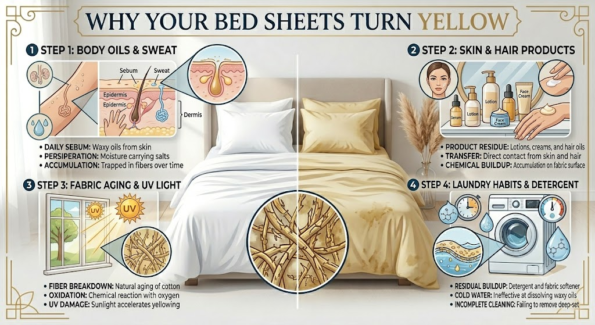
This is the primary cause of yellowing in virtually all households. During sleep, your body naturally produces sweat and sebum — the skin’s natural oil — as part of its temperature regulation process. These substances transfer directly to your bed sheets with every night of use.
On their own, sweat and body oils are colourless. The yellowing occurs through oxidation — when these substances are exposed to air and heat over time, they undergo a chemical reaction that produces a yellow or amber tint. The longer they remain in the fabric between washes, the more deeply the discolouration sets.
In Pakistan’s summer months, when body temperature is higher and sweating more pronounced, this process accelerates significantly. Hot sleepers and those who experience night sweats will notice yellowing appearing faster than average.
Skincare Products and Body Lotions
Creams, body lotions, moisturisers, facial oils, and leave-in hair conditioners are among the most overlooked causes of yellow bed sheets — particularly on pillowcases.
Most of these products contain oils, silicones, and chemical compounds that do not fully absorb into the skin. The residue that remains on the skin’s surface transfers onto your sheets and pillowcase during the night. These compounds oxidize in the fabric and produce yellow or brownish discolouration that often appears in concentrated areas — around the pillow, the neck area, and the upper portion of the fitted sheet.
Applying skincare products well before bedtime — at least 30 minutes before sleeping — significantly reduces how much product transfers to your bed sheets.
Detergent and Fabric Softener Residue
This is the cause that most people never consider — and it is surprisingly common. When too much laundry detergent is used, or when the washing machine is overloaded, the detergent does not fully rinse out of the fabric. The residue that remains in the fibers attracts body oils and dead skin cells during subsequent use, building up a layer of residue that eventually turns yellow.
Fabric softeners are a particularly frequent culprit. They coat fabric fibers with a chemical film that initially makes sheets feel softer. Over time, this coating builds up, traps oils, and contributes directly to yellowing — especially on white and cream bed sheets.
Using the correct amount of detergent, running an extra rinse cycle, and avoiding fabric softeners altogether will make a noticeable difference to the long-term whiteness of your sheets.
Hard Water Mineral Deposits
Pakistan’s water supply in many cities — including Lahore, Karachi, and Islamabad — is classified as hard water, meaning it contains elevated levels of calcium and magnesium minerals. When hard water is used to wash bed sheets, these minerals can deposit in the fabric fibers.
Over time, mineral deposits cause white and light-coloured fabrics to appear dull, grey, or yellowish. Hard water staining often looks different from sweat or oil yellowing — it tends to affect the entire sheet rather than appearing in concentrated spots.
Adding a cup of white vinegar to the rinse cycle helps dissolve mineral deposits and is one of the most effective solutions for hard water yellowing specifically.
Incorrect or Prolonged Storage
How you store your bed sheets between uses has a direct impact on their whiteness. Storing sheets in plastic bags or sealed plastic containers — a common practice in Pakistani households — is one of the leading causes of yellowing during storage.
Plastic traps moisture and prevents airflow, creating the humid, low-oxygen conditions that cause oxidation in fabric fibers. Even clean, freshly washed sheets will develop a yellow tint if stored in plastic for extended periods.
Storing sheets in a cool, dry place with good airflow — a linen cupboard, open shelf, or breathable fabric bag — prevents this entirely.
Age and Natural Fiber Breakdown
Over time, all natural fiber bed sheets undergo a gradual process of fiber degradation. Cotton fibers break down with repeated washing and use, and this breakdown can cause the fabric to appear yellow or dingy even with proper care. This form of yellowing cannot be reversed — it is a sign that the sheets have reached the end of their useful life and need replacing.
The rate of this degradation depends heavily on fabric quality. Higher-quality cotton bed sheets with longer fibers maintain their appearance significantly longer than lower-quality alternatives. Choosing quality from the start is the most effective long-term strategy.
How to Remove Yellow Stains from Bed Sheets
Most yellowing — particularly when it is caught early — can be significantly reduced or eliminated using common household ingredients. The following methods are effective, fabric-safe, and widely available in Pakistan.
Baking Soda and Vinegar — The Most Effective Combination
This is the most consistently effective method for general yellowing caused by sweat, body oils, and detergent residue.
Add half a cup of baking soda directly to the washing machine drum with your bed sheets. Add half a cup of white vinegar to the fabric softener compartment. Wash on a warm cycle with a mild detergent. The baking soda lifts and neutralises stains while the vinegar breaks down mineral deposits and detergent residue. Together they produce a noticeably brighter result than either used alone.
Do not mix vinegar and baking soda directly in the same compartment — add them to separate sections of the machine and let the wash cycle combine them naturally.
Lemon Juice — Natural Bleaching for Mild Yellowing
Lemon juice contains citric acid, which acts as a natural, fabric-safe bleaching agent. For mild yellowing, squeeze the juice of one lemon into the washing machine drum along with your regular detergent and wash on a warm cycle.
For more significant yellowing, fill a large basin or bucket with warm water and the juice of two to three lemons. Soak the sheets for one to two hours before washing. Air drying in sunlight after this treatment enhances the whitening effect, as UV rays naturally brighten fabrics.
This method works particularly well on cotton bed sheets and is gentle enough to use regularly without damaging fibers.
White Vinegar Soak — Best for Hard Water and Mineral Staining
For yellowing caused by hard water or mineral deposits, a vinegar pre-soak is the most targeted solution.
Mix half a cup of white vinegar with a full bucket or basin of warm water. Submerge the sheets and soak for one to two hours. Transfer directly to the washing machine and wash on a regular cycle with mild detergent. The citric properties in vinegar dissolve mineral deposits that standard detergent cannot remove.
The slight vinegar smell evaporates completely during drying and leaves no residue.
Oxygen-Based Stain Remover — For Stubborn or Set-In Yellowing
For yellowing that has been present for some time and has set deeply into the fibers, an oxygen-based stain remover (available in most Pakistani supermarkets) is more effective than natural alternatives. Follow the product instructions for soaking time before washing.
Avoid chlorine bleach on yellow stains. Bleach reacts with the organic compounds in sweat and body oils — the same compounds causing the yellowing — and can actually deepen the yellow discolouration rather than removing it. Reserve bleach for disinfection purposes only, not stain removal.
How to Prevent Yellow Bed Sheets
Prevention is far easier than treatment. The following habits, applied consistently, will significantly slow the yellowing of your bed sheets — even white ones.
Wash every 7 to 10 days: The single most effective prevention. The longer sweat, oil, and skincare residue sit in fabric, the more deeply they oxidize and set. Regular washing prevents buildup before it becomes staining.
Use the correct amount of detergent: More detergent does not mean cleaner sheets — it means more residue left in the fabric. Follow the detergent manufacturer’s instructions and consider running an extra rinse cycle for white sheets.
Avoid fabric softeners: These coat fibers and trap residue. If you want softer sheets, use half a cup of white vinegar in the rinse cycle instead — it softens fabric naturally without leaving a buildup.
Allow skincare products to absorb before sleeping: Apply moisturisers, body oils, and hair products at least 30 minutes before getting into bed. This dramatically reduces how much product transfers to your sheets.
Shower before bed: Washing off the day’s sweat, sunscreen, and skincare product residue before sleeping is one of the most effective habits for extending the whiteness of light-coloured bed sheets.
Store sheets correctly: Never store sheets in plastic. Use a breathable linen cupboard or open shelf. If your cupboard is prone to dampness — particularly during Pakistan’s monsoon months — place a moisture absorber nearby.
Wash whites separately: Always wash white and light-coloured bed sheets separately from coloured items. Even small amounts of colour transfer can cause light sheets to look dull or tinted over time.
Sun-dry when possible: Natural sunlight has a mild bleaching effect on white fabrics and kills bacteria that contribute to odour and staining. Air drying white bed sheets in indirect sunlight — avoiding harsh midday sun that can weaken cotton fibers — helps maintain their brightness between deeper cleaning treatments.
Choosing Bed Sheets That Resist Yellowing
The quality and type of your bed sheets directly affects how quickly and severely they yellow.
Choose higher-quality cotton: Long-staple cotton fibers resist staining and discolouration more effectively than short-staple alternatives. The tighter weave of quality cotton also makes it harder for oils and sweat to penetrate deeply into the fabric, making stains easier to remove.
Consider darker or patterned alternatives for everyday use: If you find yourself constantly battling yellow stains on white sheets, switching to printed bed sheets in deeper tones or patterns for everyday use — reserving white sheets for guest rooms or special occasions — is a practical solution that eliminates the problem entirely.
Use a mattress protector: A good mattress protector adds a barrier between your body and your fitted sheet, significantly reducing the amount of sweat and oil that reaches the sheet fabric directly. This single addition extends the life and whiteness of your bed sheets more effectively than almost any washing technique.
Rotate between two sets: Having two sets of bed sheets and rotating between them means each set is used and washed less frequently — which slows fiber degradation and reduces the cumulative buildup that causes yellowing.
Explore the full range of cotton bed sheets at bedsheet.com.pk — including plain, printed, and embroidered options in a wide range of colours and sizes.
When to Replace Rather Than Restore
Some yellowing can be fully reversed. Some cannot. Here is how to tell the difference.
Reversible yellowing: Appears in concentrated areas (pillow area, neck area, foot of the sheet). Responds to soaking and treatment. The fabric still feels intact and relatively soft.
Irreversible yellowing: Affects the entire sheet evenly. Does not respond to repeated treatment. The fabric feels thin, rough, or has begun to pill. In these cases, the fibers have degraded past the point where whitening treatments can restore them. The most practical solution is replacement.
A quality set of cotton bed sheets, properly cared for, should maintain their appearance for two to four years before degradation becomes noticeable. Extending that lifespan through the prevention habits above — combined with prompt treatment when yellowing begins — is the most cost-effective approach to keeping your bedding looking its best.
Frequently Asked Questions
Why do my white bed sheets turn yellow even though I wash them regularly?
Regular washing helps but does not fully prevent yellowing if the cause is oxidation from body oils, fabric softener residue, or hard water minerals. These require specific treatments — vinegar, baking soda, or lemon juice — that standard detergent does not address. Washing frequency slows the process but does not eliminate it entirely.
Can bleach remove yellow stains from bed sheets?
Chlorine bleach should not be used on yellow stains caused by sweat or body oils. It reacts with the organic compounds that cause yellowing and can make the stains worse and more permanent. Use oxygen-based stain removers or natural alternatives like baking soda and vinegar instead. Bleach is safe for disinfection on white cotton but not for stain removal on organic yellowing.
Why are my bed sheets turning yellow where my head rests?
This is the most common pattern of yellowing and is caused by a combination of sweat, hair products, facial skincare residue, and saliva transferring to the pillowcase and upper sheet during sleep. Applying skincare and hair products earlier in the evening and showering before bed will significantly reduce this concentrated yellowing.
Do fabric softeners cause bed sheets to yellow?
Yes. Fabric softeners coat fabric fibers with a chemical film that builds up over time and traps body oils and detergent residue. This buildup contributes directly to yellowing. Replace fabric softener with half a cup of white vinegar in the rinse cycle for softer sheets without the yellowing effect.
How do I prevent bed sheets from yellowing in storage?
Never store sheets in plastic bags or sealed containers, which trap moisture and cause oxidation. Store in a clean, dry, well-ventilated space — a linen cupboard or open shelf — ideally in a breathable cotton or linen storage bag. Ensure sheets are completely dry before folding and storing, as even slight dampness accelerates yellowing during storage.
Final Thoughts
Yellowing bed sheets are not a reflection of how clean you are — they are the natural result of prolonged contact between fabric and the substances your body produces every night. Understanding the causes makes the solution straightforward.
Wash regularly. Use the right amount of detergent. Avoid fabric softeners. Treat yellowing early with baking soda and vinegar. Store sheets correctly. And when prevention becomes more effort than the sheets are worth, invest in a quality replacement set that will maintain its appearance for longer.
For white and light-coloured bed sheets that hold their brightness through consistent use and careful washing, choosing quality fabric from the start makes all the difference. Explore our full range of bed sheets at bedsheet.com.pk — available in cotton, plain, printed, and embroidered options to suit every bedroom and budget.